 Skip to content

In 2026, 26% of UK learners choose automatic — up from 18% just four years ago. That shift matters if you’re about to book your first lesson in Wimbledon, Morden, or anywhere across South West London, because the choice you make now shapes your licence, your costs, and how long it takes to pass.
Most driving schools will tell you both are fine. That’s true and not particularly useful. The honest answer depends on three things: what you plan to drive after you pass, how quickly you want to be road-ready, and how your brain tends to deal with coordination under pressure.
Here’s what actually separates the two — and how to decide.
What Changes Between Manual and Automatic Lessons
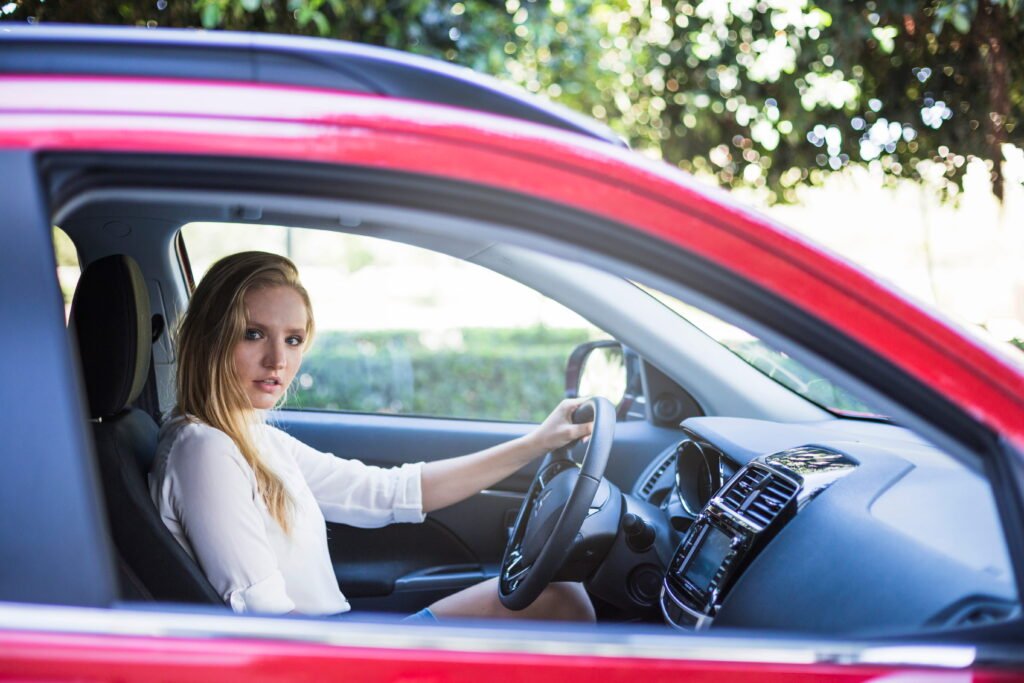
A manual car has 3 pedals and a gearstick. You control gear changes yourself, which means your left foot manages the clutch and your hands split attention between the wheel and the gearstick, particularly in stop-start traffic and on hills.
An automatic car has 2 pedals. The car selects gears for you. Your left foot stays off the pedals entirely — a habit that takes about two lessons to build reliably.
This isn’t a trivial difference. For learners who find multi-tasking under pressure difficult — managing speed, observation, mirrors, and gear changes simultaneously in Wimbledon’s busy A238 or the Morden one-way system — the removal of gear changes reduces cognitive load significantly. For others, manual gives a stronger sense of vehicle control that they find easier to build confidence with.
Hours to Pass: The Honest Numbers
The DVSA recommends 45 hours of professional lessons plus 22 hours of private practice for manual learners. Automatic learners average 30 to 35 hours of professional instruction.
That gap is real. Ten to fifteen fewer hours means roughly £300–£450 less in lesson costs at standard South West London rates, depending on the school.
But — and this is where the calculation shifts — if you pass your automatic test and later need to drive a manual vehicle for work, a move, or a hire car abroad, you’ll need to retake a full manual test. There is no conversion process. The automatic-only licence restricts you permanently until you test again.
For most people who drive daily commuter routes in London and don’t anticipate needing a manual car, that restriction is irrelevant. For people who travel frequently, plan to tow, or work in roles that might require a van, the restriction is a genuine long-term cost.
Licence Restrictions: What an Automatic-Only Licence Actually Means
Passing in an automatic gives you a Category B automatic licence. This lets you drive:
Automatic cars and most modern electric vehicles (which are all automatic).
It does not let you drive:
Manual cars, manual vans, or any vehicle with a clutch. If you’re renting a car in Europe and the only available vehicle is manual — common in France, Spain, and Germany — you cannot legally drive it.
Passing in a manual gives you a full Category B licence covering both manual and automatic vehicles. No restriction.
Which Is Harder to Pass in South West London?
Morden Driving Test Centre runs 12,157 tests per year with a 50.2% first-time pass rate — above the national average of 47.3%. Most test routes from Morden cover Merton Road, Kingston Road, and sections of the A24, which include roundabouts, pedestrian crossings, and residential 20mph zones.
The test is identical in format for both manual and automatic candidates. Examiners assess the same competencies: observation, speed management, positioning, and response to hazards.
What differs is the failure distribution. Manual candidates fail more frequently on gear-related faults: stalling at junctions, poor gear selection on hills, and clutch control in slow-moving traffic — all of which appear on the Morden test routes. Automatic candidates have fewer mechanical faults but occasionally struggle with speed awareness in vehicles that accelerate more smoothly and intuitively than they expect.
The Cost Comparison for South West London Learners
Lesson costs are the same per hour regardless of transmission. The saving comes from the hours required.
Manual learner — typical South West London journey to test: 45 professional hours + 22 private hours. At £38 per hour, professional costs come to approximately £1,710.
Automatic learner — typical South West London journey to test: 30–35 professional hours + 15 private hours. At £38 per hour, professional costs come to approximately £1,140–£1,330.
That’s a saving of roughly £380–£570 in lesson costs — before accounting for whether you’ll need additional tests later.
If you’re considering an intensive course to pass quickly, both transmissions are available. Kudos Driving School offers intensive courses in South West London for both manual and automatic learners — you can see the course options on the Intensive Driving Course page.
Who Should Choose Manual in 2026?
Manual is the better choice if any of the following apply:
You work in a role that might require driving a company van, minibus, or other manual vehicle.
You regularly travel to countries where automatic hire cars are expensive or unavailable — most of continental Europe.
You want maximum flexibility and don’t want to think about licence restrictions after you pass.
You learn better when you feel in direct control of the vehicle and find the engagement of gear changes helpful rather than distracting.
Who Should Choose Automatic in 2026?
Automatic is the better choice if:
You drive primarily in London or urban environments where stop-start traffic is frequent and gear changes add stress without adding skill.
You’ve tried manual lessons and found clutch control or gear selection a persistent block to progress.
You want to pass in the shortest time at the lowest cost and have no specific need for a manual licence.
You drive or plan to drive an electric vehicle — all EVs are automatic.
You have a physical condition affecting left-leg use, in which case automatic is the practical necessity.
Making the Decision: A Simple Framework
Ask yourself one question before booking: in five years, what are you most likely to be driving?
If the answer is a standard London commuter car, an EV, or an automatic SUV — choose automatic. You’ll pass faster, spend less, and the licence restriction won’t affect your life.
If the answer includes any possibility of vans, European hire cars, or vehicles you don’t currently own — choose manual. The extra hours are an insurance premium against having to sit a second test later.
Unsure? Our instructors at Kudos Driving School offer first lessons in both manual and automatic. Book through the Price & Packages page — you can switch transmission in the first two sessions without penalty if one clearly isn’t working.
Frequently Asked Questions
Can I switch from automatic to manual lessons partway through?
Yes, but you’ll restart your hour count for practical purposes — the skills don’t transfer directly. Most learners who switch do so in the first three to five lessons before significant progress has been made in either direction.
Is an automatic test easier to pass than a manual test?
The test is the same. Automatic candidates generally produce fewer mechanical faults, but the pass rate difference between transmission types is smaller than most learners expect — roughly 3 to 5 percentage points nationally in 2025.
Do automatic driving lessons cost more than manual?
The per-hour rate is the same at most schools including Kudos. Automatic courses cost less overall because fewer hours are typically needed to reach test standard.
Which transmission is better for nervous drivers?
Most driving instructors find that genuinely anxious learners progress faster in automatics, because removing gear-change decisions reduces the number of things to manage simultaneously. That said, some learners find the engagement of manual driving helps them feel more in control. A single trial lesson in each is the most reliable way to find out.
Are electric cars automatic?
Yes. All electric vehicles are automatic. If you expect to drive an EV, an automatic licence covers you completely.
Book Your First Lesson in South West London
Kudos Driving School offers manual and automatic driving lessons across Wimbledon, Morden, Tooting, Clapham, Putney, Streatham, and surrounding areas. Our DVSA-approved instructors cover both transmissions, and we offer female instructors on request.
See available courses and pricing: Driving Courses | Intensive Driving Course | Price & Packages
